
If you’re thinking about buying a mobile home, you might be curious about how much you can actually customize. Some people believe there are no options, while others think everything is up for change. The truth is, customization is somewhere in the middle.
Mobile homes are built in sections in a factory, unlike site-built homes. Each model comes with different versions, options, and upgrades. Knowing how your options and budget work together makes it easier to choose what’s right for you.
Why Mobile Homes Are Rising in Popularity as an Affordable Housing Option
It’s tempting to focus on colors or finishes, but the most important choices are about layout, budget, and how you’ll use the home every day. Figuring this out early helps you avoid choices that seem good at first but don’t work well in the long run.
Now that you know the basics, let’s look more closely at what you can actually customize when buying a mobile home.
You make customization choices before the home is built. Depending on the manufacturer and model, you can usually pick from several floor plans based on the size of the home. You can’t redesign the whole layout, but some manufacturers let you flip the floor plan or make a few small structural changes.
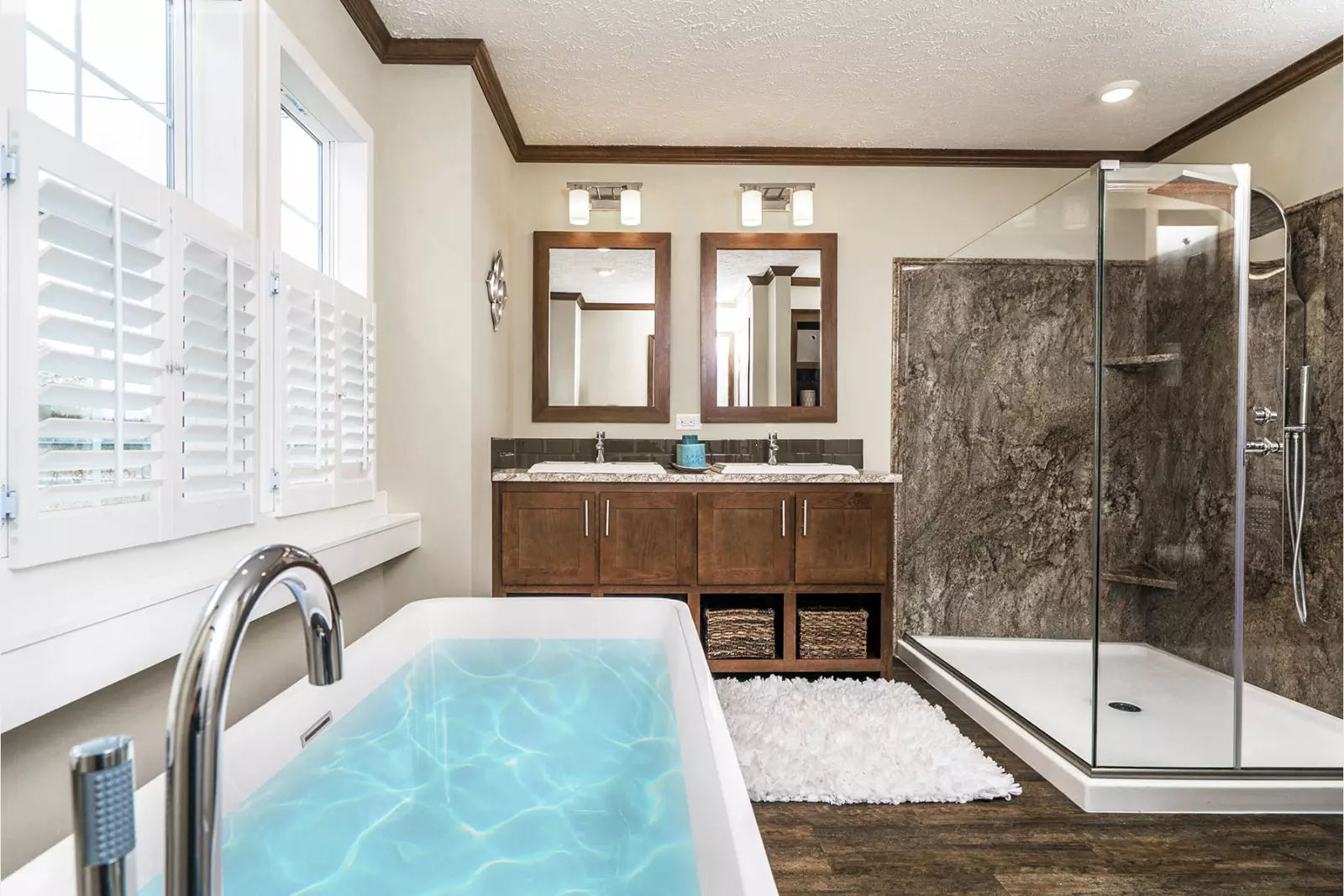
Most of your customization happens with interior finishes. These choices might seem small, but they add up fast. The flooring, cabinets, and countertops you pick really shape how your home feels when it’s done. Even small changes, like cabinet color or flooring type, can make a space feel more open or modern.
Some people keep things basic to save money, while others upgrade the areas that are the most important to them. There’s no right or wrong way to do it, but it’s smart to think about how you’ll use each feature over time, not just how it looks when the home is new.
Exterior options also depend on the manufacturer and model. You might be able to choose things like siding colors, trim packages, shingle styles, or roof shapes. Some homes even offer upgraded or more durable siding that looks like wood grain.
Besides looks, think about practical upgrades like insulation, wind zone ratings, and snow load ratings, especially based on where your home will be placed. These upgrades help your home handle local weather. Your exterior choices also affect how well the home stands up to wind, rain, or cold.
Even though your home isn’t built from scratch, you still get to choose how it looks and works. The available options are set up to fit the manufacturing process, meet building codes, and keep things efficient.
While you can customize some things, it’s just as important to know what can’t be changed in a mobile home.
Federal standards mean some parts can’t be changed, like the main structure and core systems such as electrical, plumbing, and heating. It’s just as important to know these limits as it is to know what you can customize.
You might notice this difference if you compare mobile homes to traditional houses. With a site-built home, you can often change the layout, move walls, or leave some parts unfinished. Mobile homes aren’t like that. They’re built to strict standards from the beginning and can’t be changed without breaking those rules.
This might feel limiting, but it actually makes things simpler. You don’t have to worry about finishing major systems or managing different construction steps. Your home arrives ready to go, which takes away a lot of the guesswork.
Mobile homes have to leave the factory fully built and ready to install. They can’t be sold as unfinished projects. That’s why you can’t buy just a shell with this type of home.
Here’s Why:
-
Keeps the building process consistent across all homes
-
Makes certain each home meets required safety standards
-
Allows the home to pass inspections
-
Makes the home eligible for financing
-
Allows the home to be insured
-
Ensures the home can be delivered and installed without complications
Building a Mobile Home: The Construction Process
How Upgrades Affect Your Budget
Most mobile homes let you pick materials, finishes, and features. Your budget will affect these choices, but not the structure of the home.
If you’re working with an entry-level budget, the focus is on cost and function. Basic models come with standard cabinets, simple countertops, and vinyl or carpet flooring. You’ll get basic appliances, making for a straightforward and practical home.
With a mid-range budget, you can upgrade for more comfort and better function. You might choose luxury flooring, more cabinet options, stainless steel appliances, and nicer fixtures for a modern look.
Most buyers find the best balance at this level. Instead of upgrading everything, they focus on the most important areas, like flooring and kitchen features. This way, they improve the feel of the home without going over budget.
With a higher budget, upgrades can make a mobile home feel more like a site-built house. You can add drywall, premium cabinets and countertops, and upgraded bathrooms. Exterior upgrades also help the home look more like a traditional house.
Even with these upgrades, the goal isn’t to make a mobile home exactly like a site-built one, but to get closer in comfort and appearance. Buyers who pick higher-end options usually want the home to feel more permanent and plan to use it long-term.
No matter your budget, the structure of the home stays the same. The changes come from the options and upgrades you choose.
Best Energy Efficiency Upgrades for Mobile Homes
Where to Spend and Where to Save
Not every upgrade adds value. Some are more practical than others, and it’s easy to overspend or overlook better choices. It’s smart to spend more on flooring in high-traffic areas for better durability and less maintenance.
In kitchens and bathrooms, functionality is a top priority. The layout affects your daily routine more than fancy fixtures or finishes. Storage is also important for making these spaces usable. Focus on what will make daily life easier first.
The idea isn’t to skip upgrades, but to pick the ones that really make daily life better. If you plan to live in the home long-term, it might be worth investing more in the areas you use most. If it’s a temporary home or part of a bigger plan, keeping upgrades simple could be the best option.
Customization Is Only One Part of the Total Cost
The home itself is just one part of your total cost. If you focus too much on upgrades, you might lose sight of the bigger project. Make sure to plan for land, site preparation, permits, utilities, and inspections. Without good planning, problems can come up.
Often, these extra costs can be as high as the price of the home itself. Site preparation can vary a lot depending on the land. Some properties need little work, while others need much more. That’s why two people buying the same home can end up with very different total costs.
Things like utility access, grading, and local rules can change your costs and timeline, and these vary from property to property. Pick features and a home that fit your lifestyle and budget for the best long-term results.
A Smarter Approach to Customization
Start by choosing a layout that matches your lifestyle. This choice will have a bigger long-term impact than finishes or upgrades.
Next, set a budget for the whole project, not just the home itself. This helps you see what you can really afford. Pick upgrades that fit your daily needs, and put function ahead of appearance.
It also helps to think in phases. Some upgrades, especially cosmetic ones, can be added later. If you start with a solid, functional base, you’ll have more flexibility and won’t stretch your budget too thin. This way, you have more control over time instead of trying to do everything right away.
This approach helps you stay on track and reduces the chances of buyer’s remorse later.
Quick Takeaways
-
You can customize some parts of a mobile home, but not everything.
-
Knowing your limits helps you focus on where you get the biggest bank for your buck
-
Your budget will affect things like finishes and upgrades, but not the structure of the home
-
Choose upgrades that add value to your daily life, like durable flooring or a practical layout, instead of features that won’t make much difference
-
The home is just one part of your total spending. Don’t forget to plan for land, permits, and site preparation
-
Planning ahead for every part of the purchase helps you avoid surprises and keeps your project running smoothly
It’s easy to focus on colors or finishes, but the most important choices are about layout, budget, and how you’ll use the home every day. Figuring this out early helps you avoid choices that seem good at first but don’t work well later.
Final Thoughts
Customizing a mobile home is about making the right choices for you and your family. When you know what can and can’t be changed, and how your budget affects your options, the whole process becomes easier, more affordable, and less stressful.
Setting clear expectations from the beginning makes homeownership a more realistic goal.