
It's a common misconception that mobile homes immediately depreciate after the initial sale as cars do. It's impossible to say that every manufactured home will appreciate over time and hold its value. Still, according to a detailed FHFA report, we can see that mobile homes appreciate very similar to stick-built homes. Contrary to popular belief, mobile homes' values do tend to appreciate over time rather than depreciate.
Are you looking for the mobile home of your dreams? Let Home Nation help!
How Is the Value of Mobile Homes Calculated?
There are two ways to determine a mobile home's value: market-based appraisals and the NADA book value. In today's market, a mobile home's book value doesn't give a reliable and accurate number regarding a manufactured home's actual value. Market-based appraisals are the best way to calculate a mobile home's value and find out if they have appreciated or depreciated.
Related: How Much Does a New Mobile Home Cost?
Market-Based Appraisals
Market-based appraisals are the same method used to determine the value of a stick-built home and are the only way to gauge the total worth of a mobile home accurately. Two main factors play into calculating the market-based appraisal:
-
A thorough inspection of the interior and exterior of the mobile home
-
The research of recent and similar manufactured home sales in the area
After inspecting the home and researching other mobile homes' values in the area, these numbers can be analyzed to produce an unbiased and expert opinion of the manufactured home's value.
It's worth noting that market-based appraisals consider whether your home is classified as real property or personal property. Homes permanently attached to land you own are treated as real property, similar to traditional houses.
This classification affects not only the appraisal value but also your financing options and tax treatment. If your manufactured home sits on rented land, it's typically classified as personal property, which can limit how lenders and appraisers view its worth.
What Affects the Cost of a Mobile Home?
The initial cost of a mobile home can vary wildly depending on many factors. Some of the most significant aspects that affect the price of manufactured homes are:
Size
Its size significantly influences the value of a mobile home. Typically, manufactured homes are either single, double, or triple-wide, and these can range anywhere from 600 to over 4,000 square feet. Larger houses have a greater initial cost.
Age
Age is another determining factor in pricing a mobile home, specifically if it was built before or after 1976. The HUD code, effective since 1976, regulates the build quality and safety of manufactured homes. Homes built before this code are much more challenging to get financing for.
There's an important distinction that often gets overlooked. The terms "mobile home" and "manufactured home" aren't interchangeable. Manufactured homes built after 1976 follow strict federal construction and safety standards, and they're built to perform much like site-built houses.
Older mobile homes built before this code don't have the same protections, which is why banks treat them differently when it comes to loans and insurance. If you're shopping for an older home, knowing this difference can save you from financing headaches down the road.
Exterior
The main parts of the home's exterior that affects the cost are the condition of the roof and walls. Another critical factor is the leveling of the manufactured home. If it's not level, it can lead to significant problems down the road.
Interior
The fixtures and features of the inside of a mobile home greatly affect the price, things like kitchen appliances, cabinets, cupboards, bathrooms, and sinks. The condition of the floors, ceilings, and walls also play a large part in the initial cost of a mobile home.
When thinking about what upgrades options should I choose for my mobile home, focus on improvements that add real value. Energy-efficient windows, updated HVAC systems, and modern kitchens tend to pay off when it's time to sell.
Cosmetic upgrades like fresh paint and new flooring can also make a big difference without breaking the bank. The key is balancing your budget with improvements that buyers actually care about.
Appreciation: Manufactured Homes Vs. Stick-Built
Related: Buying a Used Mobile Home
Purchase-Only Index
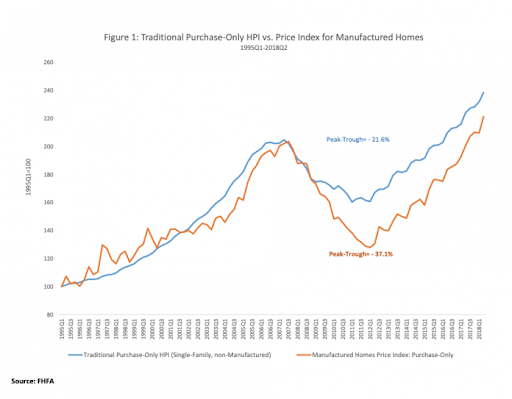
The purchase-only index takes the homes' initial purchase values into account, and we can learn a lot about the appreciation and depreciation of site-built and manufactured homes by looking at the graph above.
We can see that both homes follow the same general when it comes to their total value. While there are slight differences, the FHFA report shows that manufactured homes appreciate and depreciate similarly to stick-built ones.
The report also answers another question; do mobile homes last as long as traditional stick-built ones? It looks like a strong yes; whether your home is manufactured or site-built, it will retain and gain value over time with the proper upkeep and maintenance.
Updated data from the FHFA paints an even clearer picture. Between 2000 and 2024, manufactured homes appreciated by 211.8%, while site-built homes saw 212.6% growth. That works out to roughly 5% annual appreciation for both types. Even more telling, manufactured homes have actually outpaced site-built homes in year-over-year price increases in nearly every quarter since 2014.
The old myth that manufactured homes lose value like cars simply doesn't hold up when you look at the numbers. According to home price appreciation data, the housing market continues to show that well-maintained manufactured homes are solid investments.
All-Transactions Index
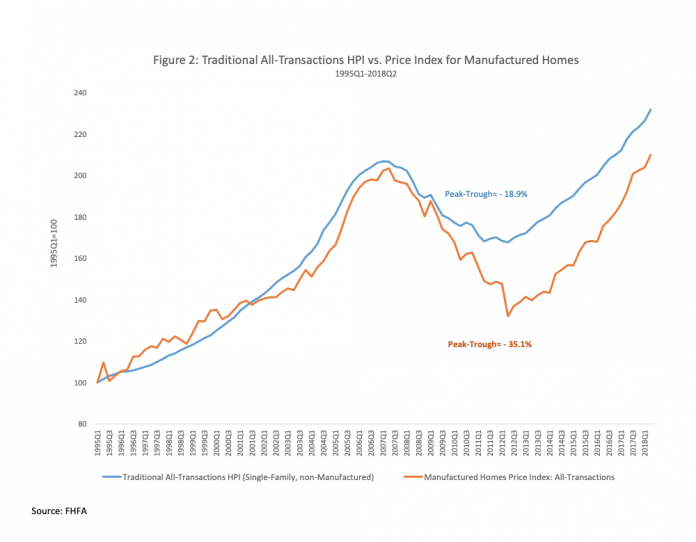
The all-transactions index, which also takes mobile home appraisal values into account, shows the same trends as the purchase-only graph. The FHFA uses the same methodology to value these indices when creating their quarterly house price index.
The FHFA's report, along with these two indices, shows how mobile homes' value correlates very closely with stick-built houses.
Related: How To Improve The Value Of Your Mobile Home Park
What Affects Mobile Home Appreciation?
Datacomp, a company specializing in the valuation of manufactured homes, analyzed 88,000 real mobile home sales to find out why some of them depreciate while others appreciate in value. Many factors affect the price fluctuations of manufactured homes, but choosing the right land for your mobile home is one of the most significant. It can affect the cost by more than 24%.
The location factor mostly means that if a manufactured home sits on its own property, it is more likely to increase in value than in a park. With more and more retirees purchasing mobile homes in 55+ communities, home prices continue to stay consistent and increase in value over time.
Some of the other significant factors that affect the appreciation of a mobile home are:
-
The housing market in the area that the house is located in has a substantial impact on the mobile home's future value
-
The community where the house sits similarly impacts the future value of the manufactured home
-
The initial price that the home was bought or sold at
-
How new or old the house is
-
The inflation rate
-
The cost and availability of community sites reflect how supply and demand influence the home's future value
-
Organized resale networks: areas with an organized system usually have higher selling prices than in markets without one

Land ownership deserves special attention because it's the single biggest factor in appreciation. Research shows that land prices increased 261% between 2012 and 2023, while structure prices rose only 49% during the same period. This means the ground under your home is doing most of the heavy lifting when it comes to building equity.
Homes on owned land are classified as real property, which opens up better financing options and typically leads to stronger appreciation. If you're currently renting your lot, consider whether purchasing the land, or relocating to land you own, might be worth it in the long run.
Another strategy that can boost your home's value is title elimination, sometimes called de-titling. This legal process removes the certificate of title from your manufactured home, converting it from personal property to real property.
Once de-titled and permanently attached to your land, your home can be sold together with the property, just like a traditional house. This can make financing easier for future buyers and potentially lower interest rates. Not every state handles this the same way, so check with your local DMV or a real estate attorney to understand the process in your area.
The Current Manufactured Housing Market
The manufactured housing market is experiencing a rebound after a tough couple of years. Factories shipped 103,300 new manufactured homes in 2024, up from 89,169 in 2023, marking a 15.9% increase in production. This growth reflects ongoing demand for affordable housing options as traditional home prices remain out of reach for many buyers.
The average manufactured home sold for around $123,300 in 2024, compared to a median single-family home value of $367,282. That's about 66% less expensive, though it's worth noting that manufactured home prices typically don't include land.
Current manufactured housing market trends suggest the sector will continue growing as affordability remains a top concern for homebuyers. States like Texas, Florida, and North Carolina lead in manufactured housing shipments, and these same states have seen strong overall home price growth.
For buyers in these markets, manufactured homes offer a way to build equity in areas where site-built homes might be financially out of reach. The affordable housing demand analysis shows that this trend isn't going away anytime soon.
How to Increase the Value of Your Mobile Home
If you already own a manufactured home, there are practical steps you can take to increase the value of your mobile home. Start with the basics: keep up with regular maintenance on your roof, siding, plumbing, and HVAC system. A well-maintained home holds its value far better than one that's been neglected. Curb appeal matters too, so consider updating your skirting, adding landscaping, or building a deck or porch.
Inside, focus on kitchens and bathrooms since these are the areas buyers notice most. You don't need a full renovation. Sometimes new fixtures, updated countertops, or modern lighting can make a real difference. Energy-efficient upgrades are also smart investments because they lower utility costs and appeal to environmentally conscious buyers. If your home is in a community, the condition and management of that community will affect your home's value, so factor that into your long-term plans.
Frequently Asked Questions About Mobile Home Value
Do manufactured homes depreciate like cars?
No. This is one of the most persistent myths in real estate. FHFA data from 2000 to 2024 shows manufactured homes appreciated at nearly the same rate as site-built homes, around 5% annually. The confusion often comes from older mobile homes built before 1976, which don't meet modern construction standards and can be harder to finance or insure.
Does it matter if my manufactured home is on rented land?
Yes, it matters a lot. Homes on owned land are classified as real property and tend to appreciate more consistently. Homes on rented lots are considered personal property, which can limit financing options and affect resale value. If you're buying, try to purchase the land along with the home when possible.
Can I get a traditional mortgage for a manufactured home?
You can if the home meets certain criteria. It needs to be built after 1976, permanently attached to a foundation, and classified as real property. Many lenders also require the home to be a certain size. Older homes or those on rented land may only qualify for chattel loans, which typically have higher interest rates.
What's the difference between a mobile home and a manufactured home?
It comes down to when the home was built. Homes built after June 15, 1976 are called manufactured homes and must meet federal HUD construction standards. Homes built before that date are technically mobile homes and weren't subject to the same regulations. This distinction affects financing, insurance, and resale value.
So, Do Mobile Homes Appreciate in Value?
Looking at all of these factors, the answer is yes, most of the time. There's no guarantee that a mobile home will appreciate in value, but there's also no guarantee for stick-built homes either. Manufactured homes will typically appreciate in value over time as long as they are well-maintained.
Ready to find a manufactured home that fits your budget and lifestyle? Browse mobile homes for sale at Home Nation and take the first step toward affordable homeownership.
Did you know that Home Nation makes buying a mobile home easy?