

Building an accessory dwelling unit (ADU) in Florida can open up real possibilities for your property. Maybe you want a comfortable space for aging parents, a private home office, or a rental unit that brings in extra income each month. Whatever the reason, ADUs give homeowners flexibility without the hassle of buying or building on a separate lot. Florida has become increasingly friendly toward these secondary dwellings, with many counties and cities updating their zoning codes to make ADU construction easier.
Key Takeaways
-
Florida Statute 163.31771 encourages local governments to adopt ADU-friendly ordinances for affordable housing.
-
Most Florida ADUs must be smaller than the primary dwelling and typically range from 400 to 1,200 square feet.
-
Building and zoning permits are required in nearly all Florida jurisdictions before ADU construction.
-
Setback requirements vary by county but commonly require ADUs to be at least 10 feet from the main home.
-
Prefab and modular homes can qualify as ADUs when they meet local building codes and foundation requirements.
What Is an ADU and Why Does It Matter in Florida?
-page-001.jpg)
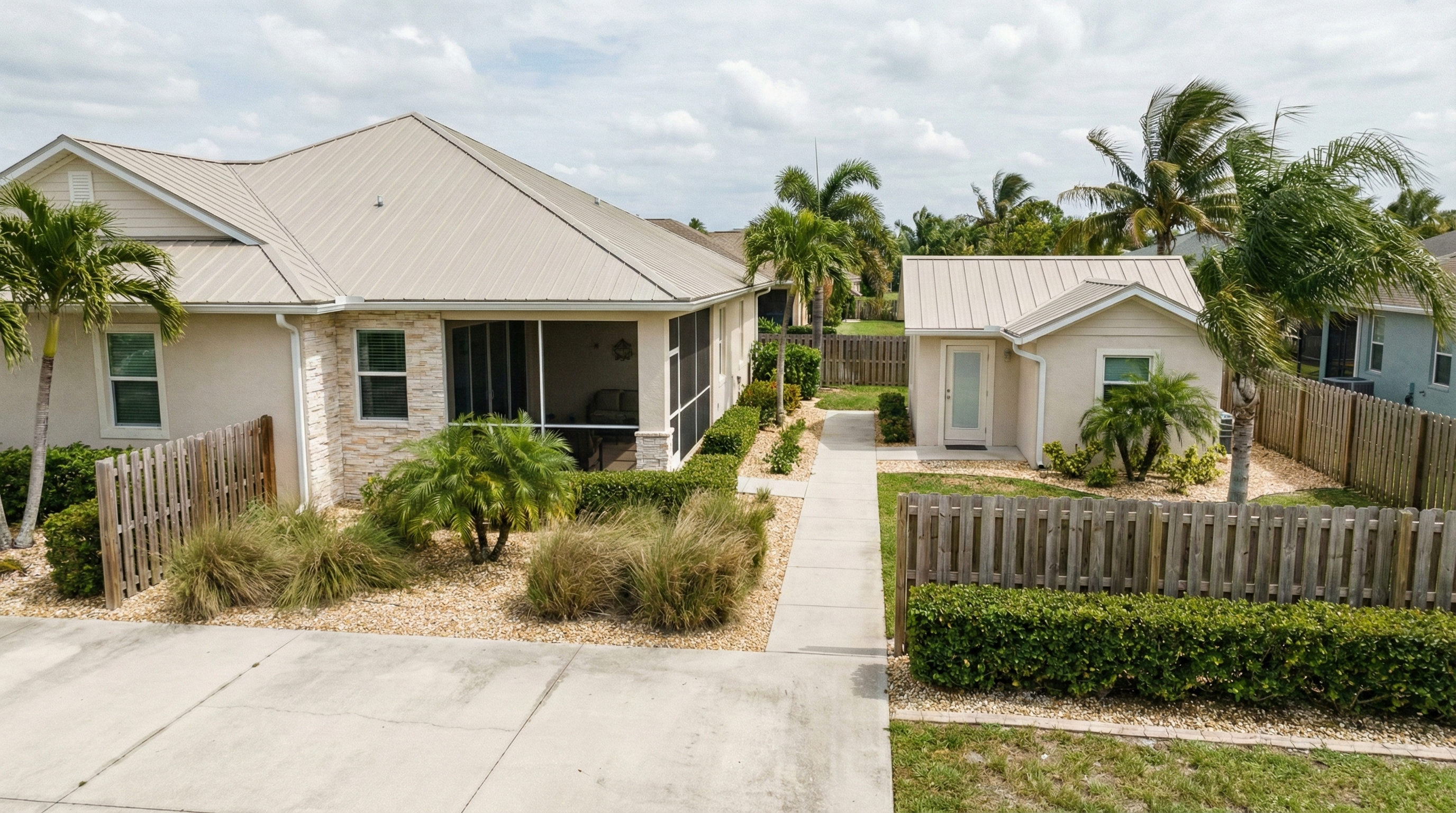
An ADU is a secondary residential unit located on the same lot as a primary single-family home. These structures go by many names, including granny flats, in-law suites, backyard cottages, and guest houses. Understanding what an accessory dwelling unit (ADU) is and how it's defined helps you navigate the planning process with confidence. They can be attached to the main house, converted from an existing garage, or built as a completely separate structure in the backyard.
Florida has taken steps at the state level to support ADU development. The benefits of building an accessory dwelling unit extend beyond personal convenience. ADUs address housing shortages, provide affordable options for renters, and allow multigenerational families to live close together while maintaining privacy. For homeowners, they can generate rental income that helps offset mortgage payments or property taxes.
Related: Mobile Home Park Vs. Private Land The Best Option For You
Florida State Law and ADU Regulations
Florida Statute 163.31771 provides a framework that encourages counties and municipalities to allow ADUs in residential areas. The law aims to increase affordable housing options for elderly residents and people with low to moderate incomes. While this statute sets the tone at the state level, each local government has the authority to create its own specific regulations. This means requirements for size, placement, and permits can differ from one county to the next. For a deeper look at local requirements, the Florida ADU zoning regulations overview offers helpful guidance.
Size and Placement Requirements
Most Florida jurisdictions set minimum and maximum size limits for ADUs. The typical minimum hovers around 400 square feet, while maximums often range from 800 to 1,200 square feet. Some counties calculate the maximum based on a percentage of the primary home's square footage, commonly 40% to 50%. Before purchasing materials or hiring contractors, confirm that will my home fit on my lot by checking with your local planning department.
Setback rules determine how close your ADU can sit to property lines and the main house. Many areas require at least 10 feet of separation from the primary dwelling, though this varies. Side and rear yard setbacks typically mirror those required for other accessory structures. Height restrictions also apply, with most counties limiting ADUs to one or two stories and requiring them to be no taller than the main residence.
Permits and Approvals You Will Need
Building an ADU requires permits in virtually every Florida jurisdiction. At minimum, you will need a building permit to confirm the structure meets Florida Building Code standards. Zoning approval confirms your property is appropriately zoned for an ADU. Some areas have specific ADU permits that streamline the process, while others require standard residential permits.
Utility connections for water, sewer, and electricity may require separate permits or inspections. If your ADU will share utilities with the main home, the permitting process might be simpler. Stand-alone utility meters typically involve additional paperwork and fees. Following the mobile home installation guide can help you understand foundation and setup requirements.
Related: Buying A Mobile Home In Florida

Types of ADUs Allowed in Florida
Florida recognizes several ADU configurations. Detached ADUs are standalone structures built in the backyard, completely separate from the main house. Attached ADUs connect to the primary dwelling through a shared wall or breezeway. Garage conversions transform existing garage space into living quarters. Interior conversions carve out a separate unit within the main home, often in a basement or attic space.
Prefabricated and modular homes can also serve as ADUs when they meet local codes. Prefab units arrive fully assembled and ready for placement, while modular units are built in sections and assembled on site. Both options can save construction time compared to traditional stick-built methods. You can see your home on your property before you buy using visualization tools that help you plan placement and design.
How Requirements Vary by County
Florida has 67 counties, and ADU rules differ across nearly all of them. Miami-Dade County allows ADUs between 400 and 800 square feet in certain zoning districts and requires a renewable Certificate of Use. Hillsborough County caps ADUs at 900 square feet, with variances available up to 1,200 square feet on larger lots. Orange County permits units up to 1,000 square feet or 50% of the primary dwelling, whichever is smaller.
Some smaller counties have less defined regulations, which can mean more flexibility or uncertainty depending on your situation. Always contact your local planning, zoning, or building department before making financial commitments. City and town regulations may also differ from county rules, so check with your municipality if you live within city limits.
Getting Started with Your Florida ADU
Planning an ADU in Florida takes research, but the process becomes manageable once you understand the basics. Start by contacting your local planning department to confirm zoning, size limits, and permit requirements for your specific property. Gather information on setbacks, utility connections, and design standards that apply in your area. With the right preparation, you can add valuable living space to your property while staying fully compliant with Florida regulations.