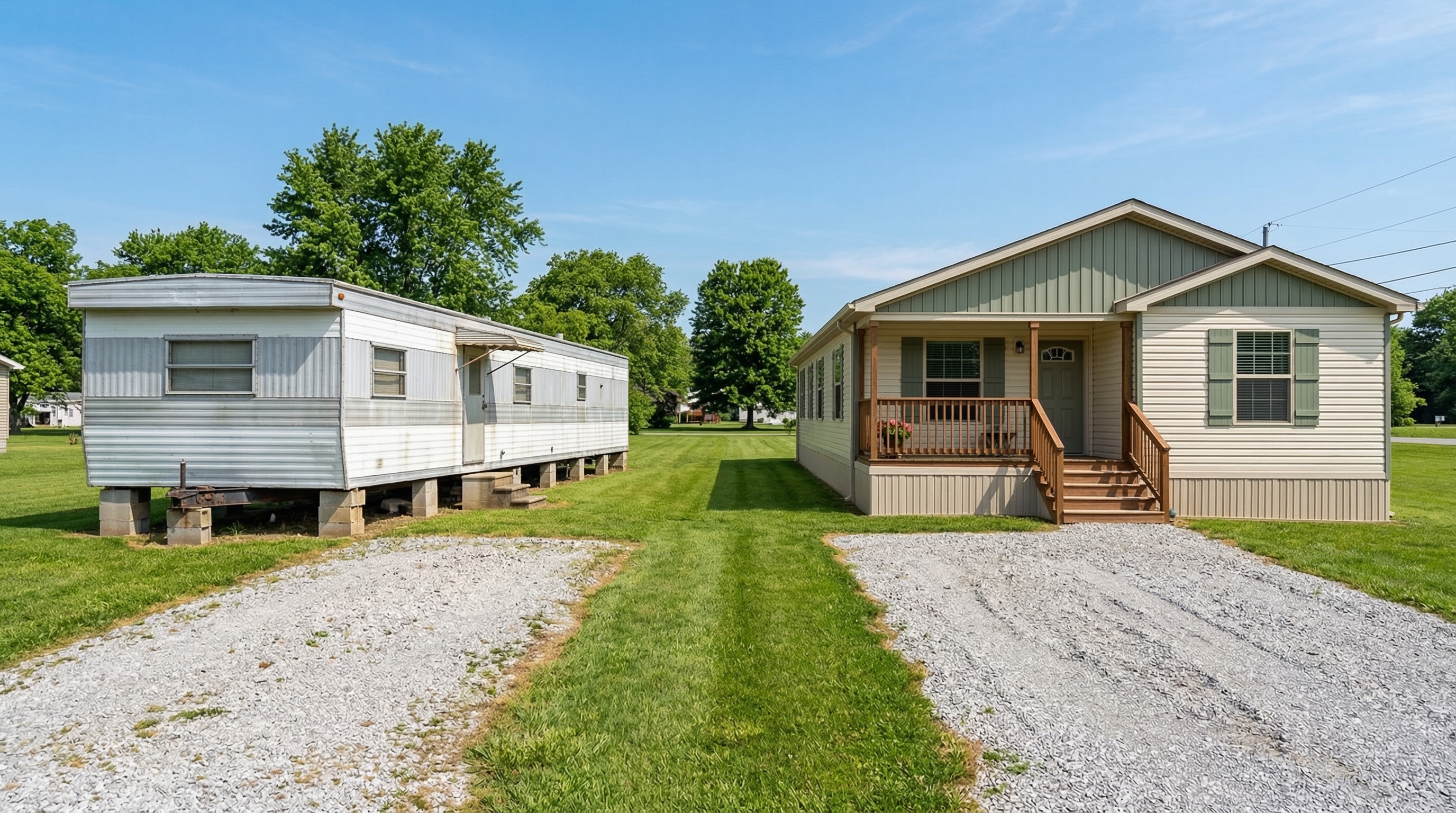
If you've ever searched for affordable housing online, you've probably seen the words "trailer" and "mobile home" used like they mean the same thing. It makes sense on the surface. Both are factory-built, both can sit on a piece of land, and both cost far less than a traditional house. But they're not the same thing, and mixing them up can lead to some real headaches down the road.
Key Takeaways
-
A trailer is designed primarily for mobility, while a mobile home is built for long-term residential use.
-
Mobile homes built after 1976 must meet strict federal HUD standards covering safety, structure, and energy efficiency.
-
The term "mobile home" has largely been replaced by "manufactured home" in the housing industry.
-
Trailers are generally not eligible for the same financing options as manufactured homes.
-
Understanding these differences helps you make smarter, better-informed decisions when buying or renting.
What Is a Trailer, Exactly?
The word "trailer" covers a lot of ground depending on who you ask. In the broadest sense, it refers to any towed vehicle, from a utility trailer to a horse trailer to a travel trailer. When people talk about trailers as homes, they typically mean travel trailers or RVs, compact units built to move frequently and provide temporary shelter along the way.
Trailers used for housing are lightweight and designed for short-term stays. You'll find them on job sites, at campgrounds, and in situations where someone needs basic shelter without committing to a permanent location. They're not built to the same construction standards as permanent homes, and in most jurisdictions, you can't legally use one as a full-time, year-round residence without running into zoning issues.
The key differences in construction and use between trailers and manufactured homes go well beyond appearance, touching on materials, mechanical systems, and how each type is regulated.
Related: Difference Between Mobile Home, Manufactured Home, Trailer, and RV
What Makes a Mobile Home Different?
The term "mobile home" technically applies to factory-built housing constructed before June 15, 1976. After that date, the federal government introduced a national building standard, and the industry began using the term "manufactured home" instead. Most people still say "mobile home," though, so the two get used interchangeably all the time.
What actually separates a mobile home from a trailer is purpose. Mobile homes and modern manufactured homes are built for people who want a permanent or semi-permanent place to live. They come with full kitchens, bathrooms, bedrooms, and living spaces.
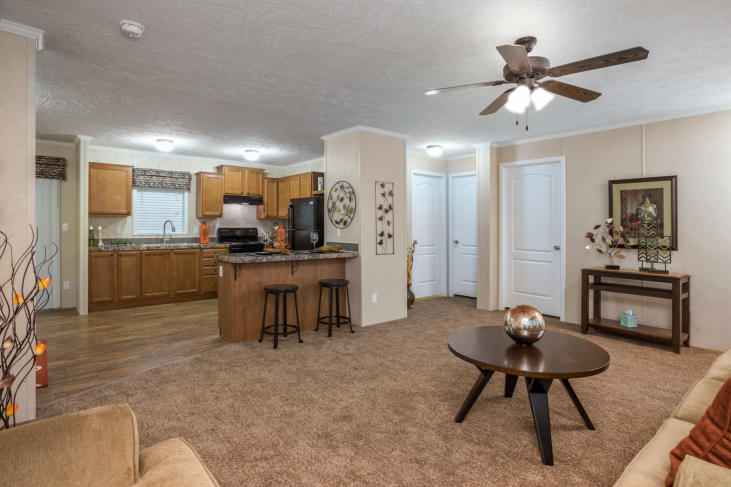
Many include features you'd expect in any site-built house, like kitchen islands, walk-in closets, and quality appliances. The guide to different types of mobile homes covers the full range of options available, from single-wide units to double-wides and park model designs. There's a lot more variety than most buyers realize going in.
The HUD Code: Why It Matters
The most significant divide between a trailer and a manufactured home is federal oversight. Since 1976, all manufactured homes must comply with the HUD Code, a national framework that governs structural design, plumbing, electrical systems, fire safety, and energy efficiency. It's not optional, and compliance is verified before any unit leaves the factory.
Trailers don't fall under the same framework. They're regulated as vehicles, not as housing, which means they meet vehicle safety standards rather than residential building codes. That's a meaningful distinction when you start thinking about long-term livability.
Mobile homes built to HUD standards are engineered for durability, and once they're placed on a permanent foundation, they're often classified as real property. That classification has a direct impact on your financing options, your insurance, and even your property taxes.
Construction Quality and Day-to-Day Livability
Here's where the differences become very practical. Comparing manufactured homes versus older trailers reveals a consistent gap in build quality. Manufactured homes use heavier structural materials, better insulation, and more durable mechanical systems throughout. Trailers are intentionally lightweight because that's what makes them towable. But that also means thinner walls, reduced insulation, and HVAC systems not built for constant residential use.
If you're living in a space full-time, those differences show up every single month. In winter, you'll feel the insulation gap in your heating bill. In summer, a lighter-built unit struggles to hold cool air efficiently. And over years of daily use, the materials simply don't hold up the same way a manufactured home would.
Related: Mobile vs Modular Homes
.png)
Regulations, Zoning, and Financing
One of the most underestimated differences between trailers and mobile homes is what each one actually allows you to do, legally speaking. Most residential zones and mobile home parks have rules that prohibit travel trailers or RVs from being used as permanent dwellings. If you're purchasing land and planning to put a home on it, you'll almost always need a structure that meets local building codes, and that means a HUD-compliant manufactured home.
Financing follows a similar pattern. Traditional mortgage loans are often available for manufactured homes placed on permanent foundations, but trailers are typically financed as vehicles rather than real property. That means shorter loan terms, sometimes higher interest rates, and fewer lender options overall. Understanding the difference between mobile home and manufactured home is especially important when it comes to resale value and long-term equity. The classification matters more than most buyers expect.
Which One Is Right for You?
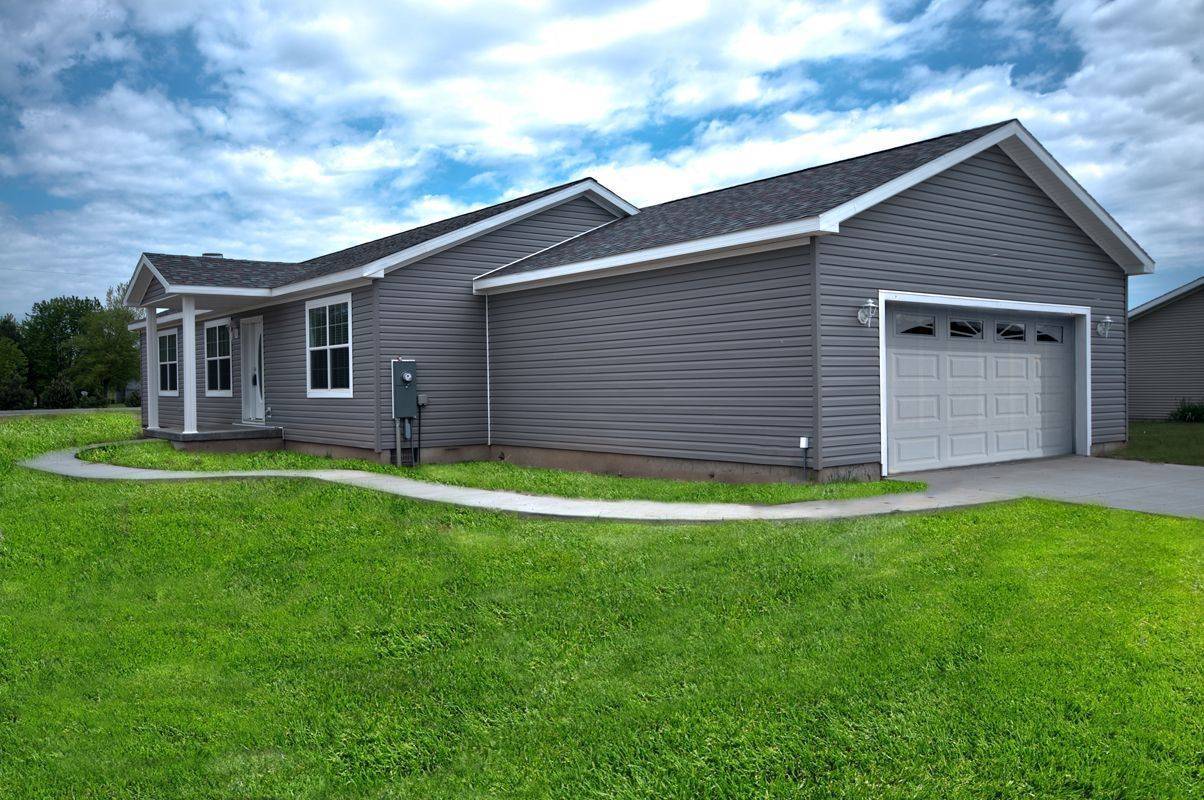
If you need temporary, flexible housing that you can move from location to location, a trailer can serve that purpose well. But if you're looking for an affordable, permanent home on your own land or inside a park community, a manufactured home is the right choice. The two products solve different problems, and trying to substitute one for the other usually creates more complications than it solves.
If you're in the market for a manufactured home and want factory-direct pricing without dealer markup, reach out to the Home Nation team to explore floor plans, delivery options, and financing that fits your situation. They ship directly from the factory and work with buyers across the country.
What It Comes Down To
The confusion between trailers and mobile homes is understandable, but the differences run deeper than most people expect. Build quality, federal standards, zoning rules, and financing options all point in very different directions for these two types of structures. If you're still sorting through your options, comparing mobile vs modular homes is a smart next step. Getting the terminology right early keeps you from making major decisions based on the wrong assumptions, and when it comes to where you're going to live, that kind of clarity matters a lot.