
Mobile Home Skirting: Everything You Need to Know
by Home Nation• Updated March 12th, 2026
Mobile homes have an open space underneath which can be a haven to animals. Rainwater or snow may also collect there, which can raise energy costs by driving indoor temperatures down.
Skirting is a practical method of protecting a mobile home from rodents, critters, and other elements creeping in. It also enhances curb appeal, hides wheels and axles, and, most importantly, leads to considerable savings on energy bills.
Here at Home Nation, we pride ourselves on high-quality, affordable mobile homes. Let's dig into everything you need to know about mobile home skirting.
What Is Mobile Home Skirting?
Mobile home skirting is the process of covering the space underneath a mobile home to protect from animals, cold, snow, and water. It protects your plumbing and ensures pipes don't freeze during winter. A properly installed skirt can also serve as storage space for items you don't use daily. The benefits of mobile home skirting are both functional and financial.
Not sure which material suits you? A professional can assess your home and give a cost estimate based on your climate, budget, and whether your setup is permanent or temporary.
.png)
Skirting Solutions
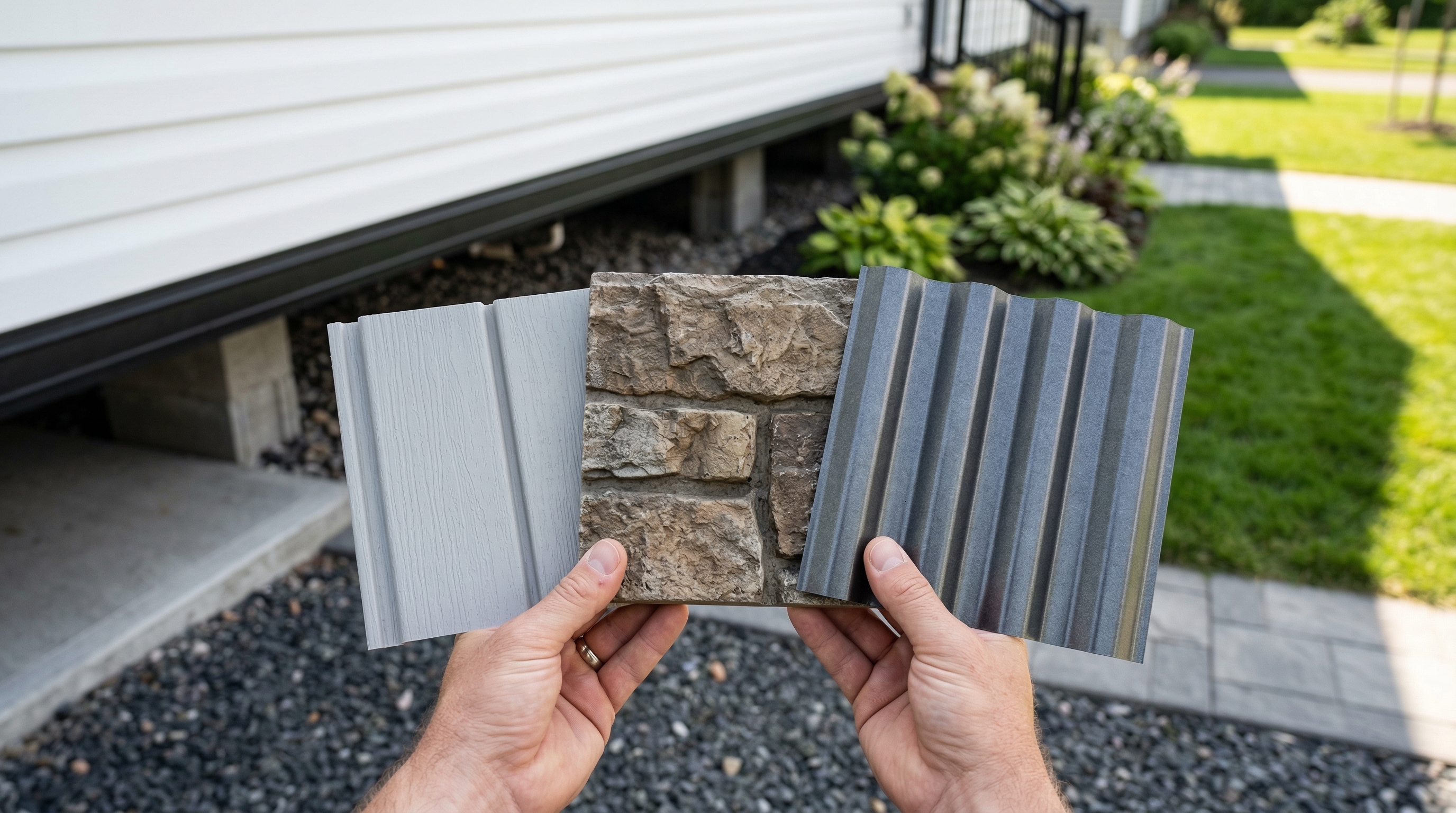
The market offers a wide variety of skirting solutions. Popular options include vinyl, concrete, metal, wood, foam, and faux rock. Before you shop, know the perimeter of your home and the height from the base to the ground. These are the numbers your supplier will need. Choosing the right mobile home skirting materials comes down to your budget, climate, and how permanent the home setup is.
Vinyl Skirting
Vinyl skirting is a popular choice among mobile home skirting materials because it's affordable, easy to cut and install, and comes in a range of colors. When installing, cut the bottom of the panels and align to the ground using a power saw. The main downside is that it can be flimsy in strong winds and may be damaged by weed trimmers. Clean it regularly with mild detergent and water to maintain its look.
Cost: Roughly $400 to $1,300 depending on home size. Insulated vinyl runs $1,400 to $5,000+. Brands to check out: SmartSkirt and Affordable Vinyl Skirting, both available at Home Depot and Lowe's.
Plywood Skirting
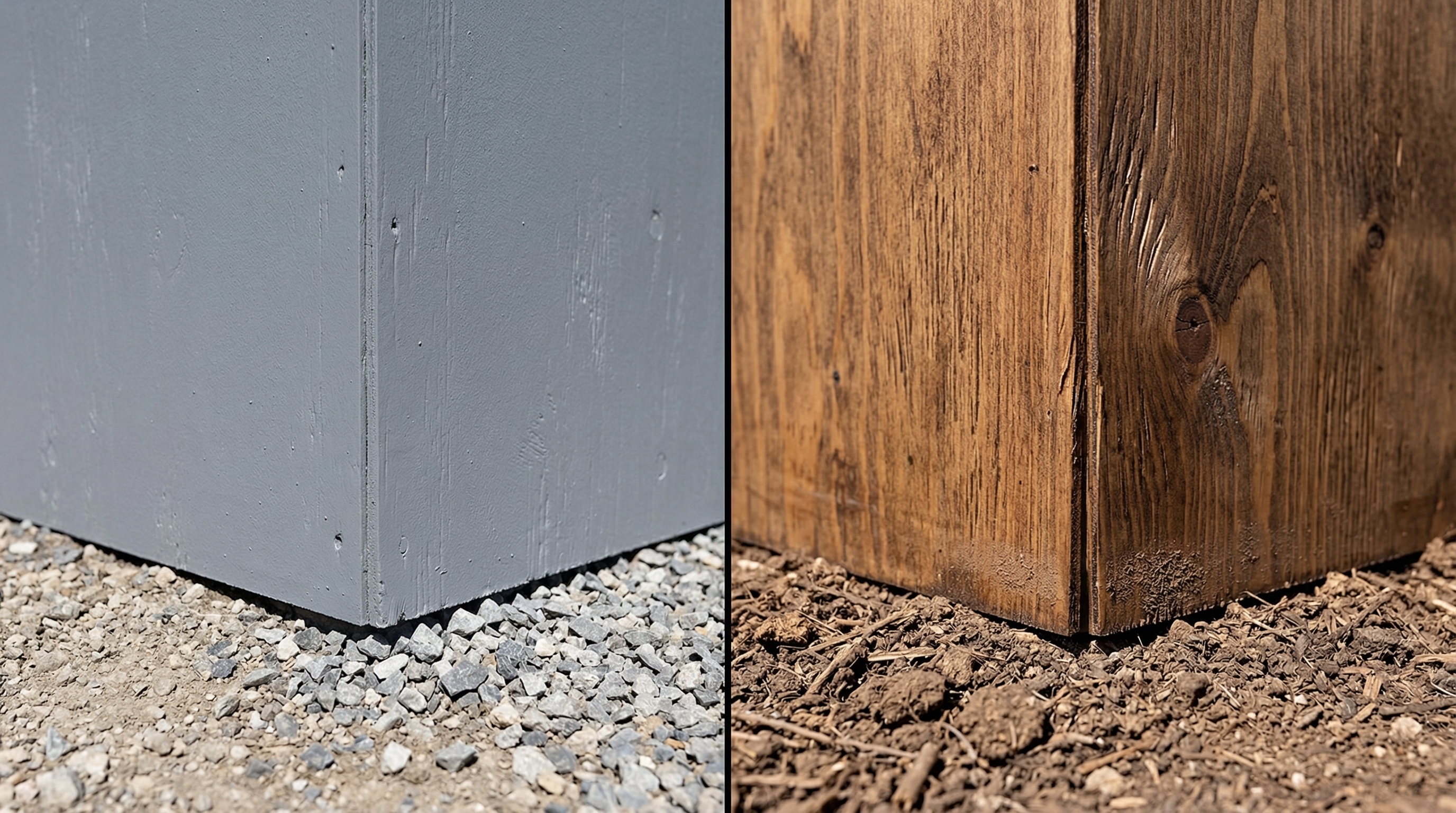
Plywood skirting involves attaching panels underneath the home with an overhang that secures the base. Include an access panel for plumbing repairs and maintenance. The main drawback is that wood is prone to rot when exposed to water. Using a water-resistant barrier underneath extends durability significantly.
Cost: One of the most affordable options. Plywood is widely available at Home Depot and Menards. Best suited for dry climates with limited moisture exposure.
Faux Rock Skirting
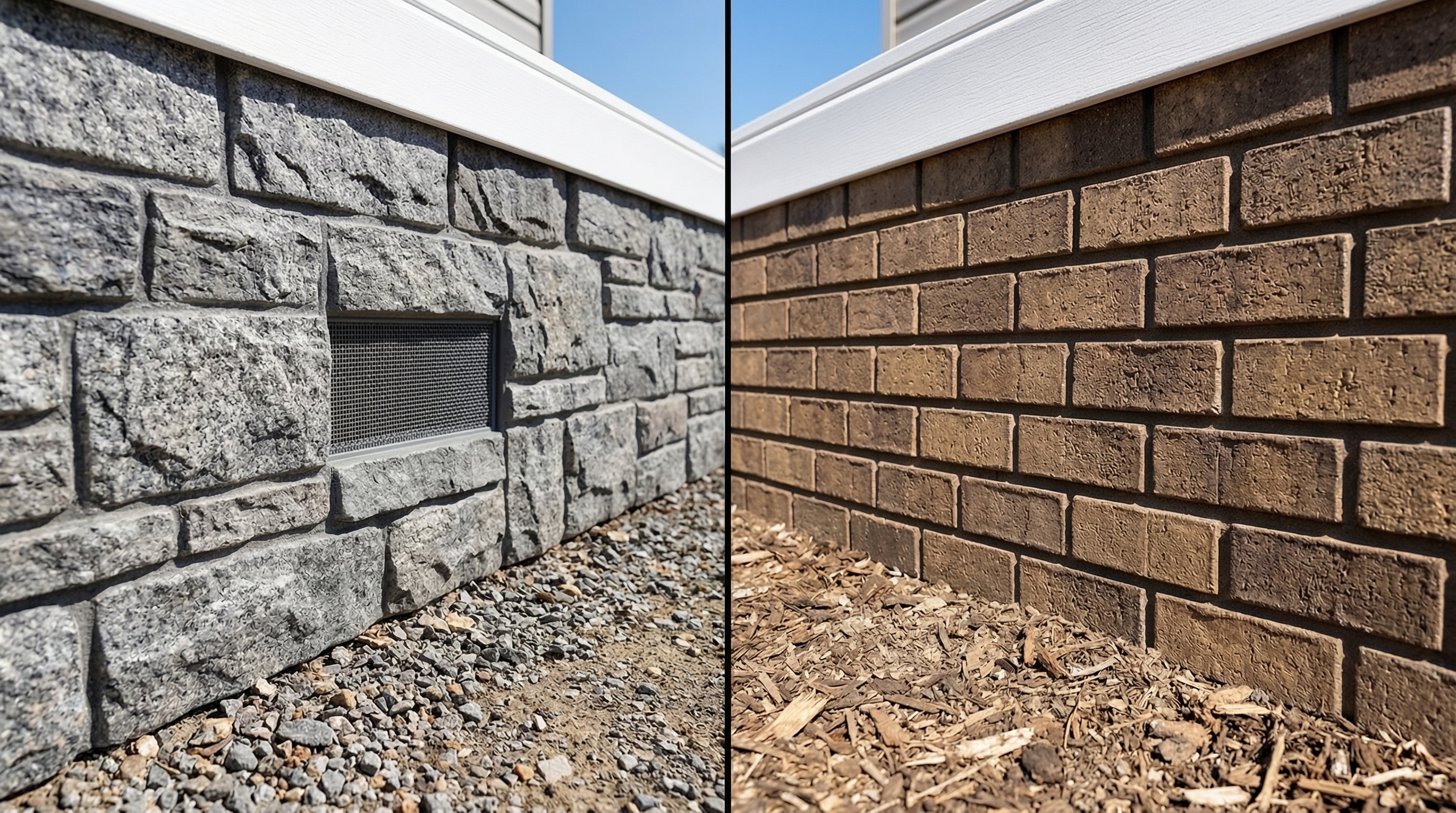
Faux rock panels are made from lightweight polyurethane and closely resemble real stone or brick. They're sturdier than vinyl and hold up well against vegetation and moisture. Most require 2x2 or 2x4 framing, and you may also need plywood backing with caulk for extra support. A wide variety of colors and styles are available.
Cost: Higher than vinyl, typically $800 to $2,500+ depending on style and home size. Check Barron Designs and FauxPanels.com for color options. Real stone panels cost even more but offer maximum wind resistance.
Metal Skirting
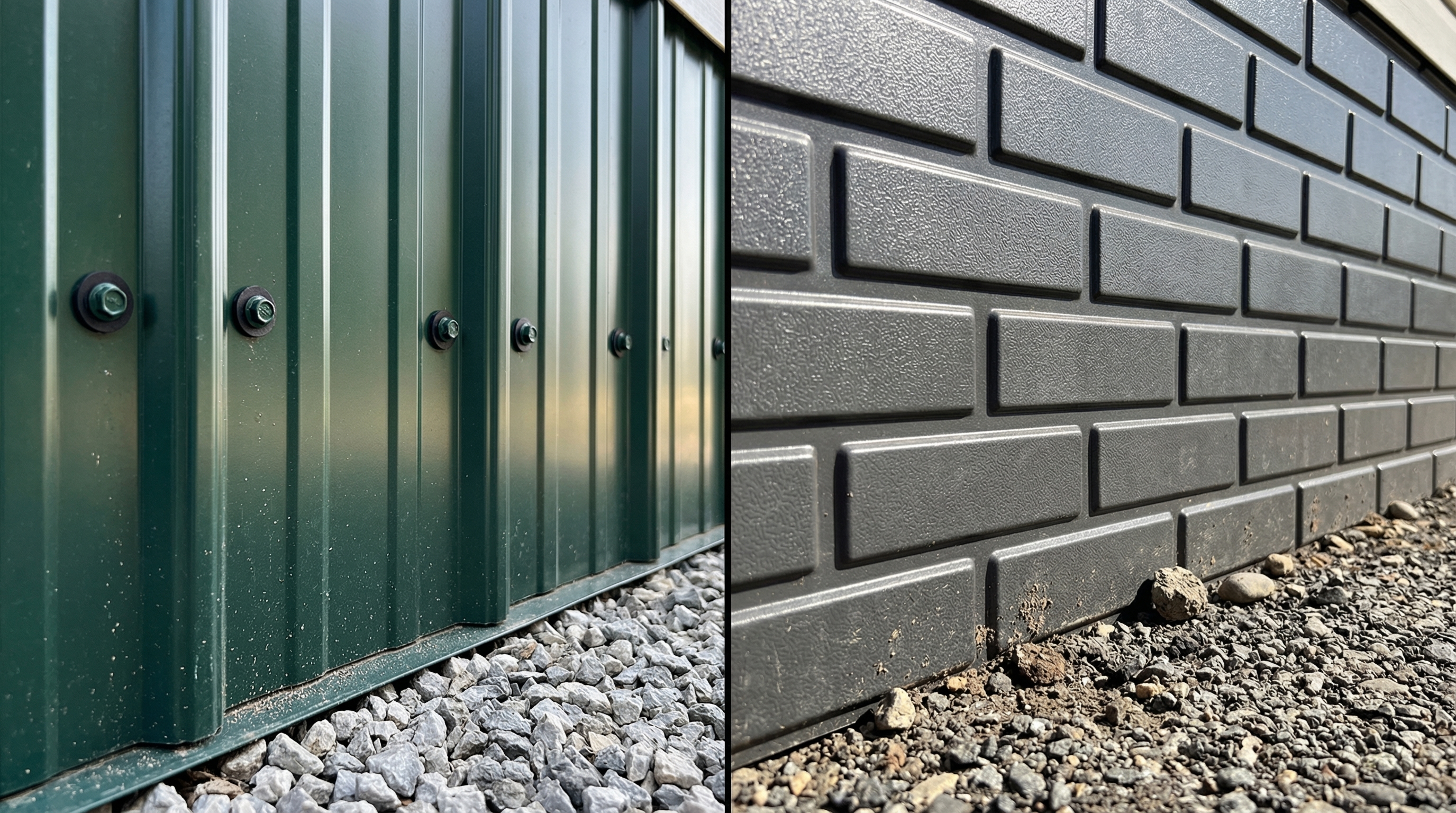
Metal is sturdy, affordable, and simpler to install than wood or vinyl when using pre-framed systems. Ribbed and corrugated panels come in different colors, and brick-stamped metal has become a popular choice for the look it gives without the masonry cost. Some suppliers offer color warranties against fading.
Cost: Mid-range. Available at ABC Supply, Menards, and specialty manufactured housing suppliers. A solid option when you want durability without the expense of masonry.
Concrete/Stucco Skirting
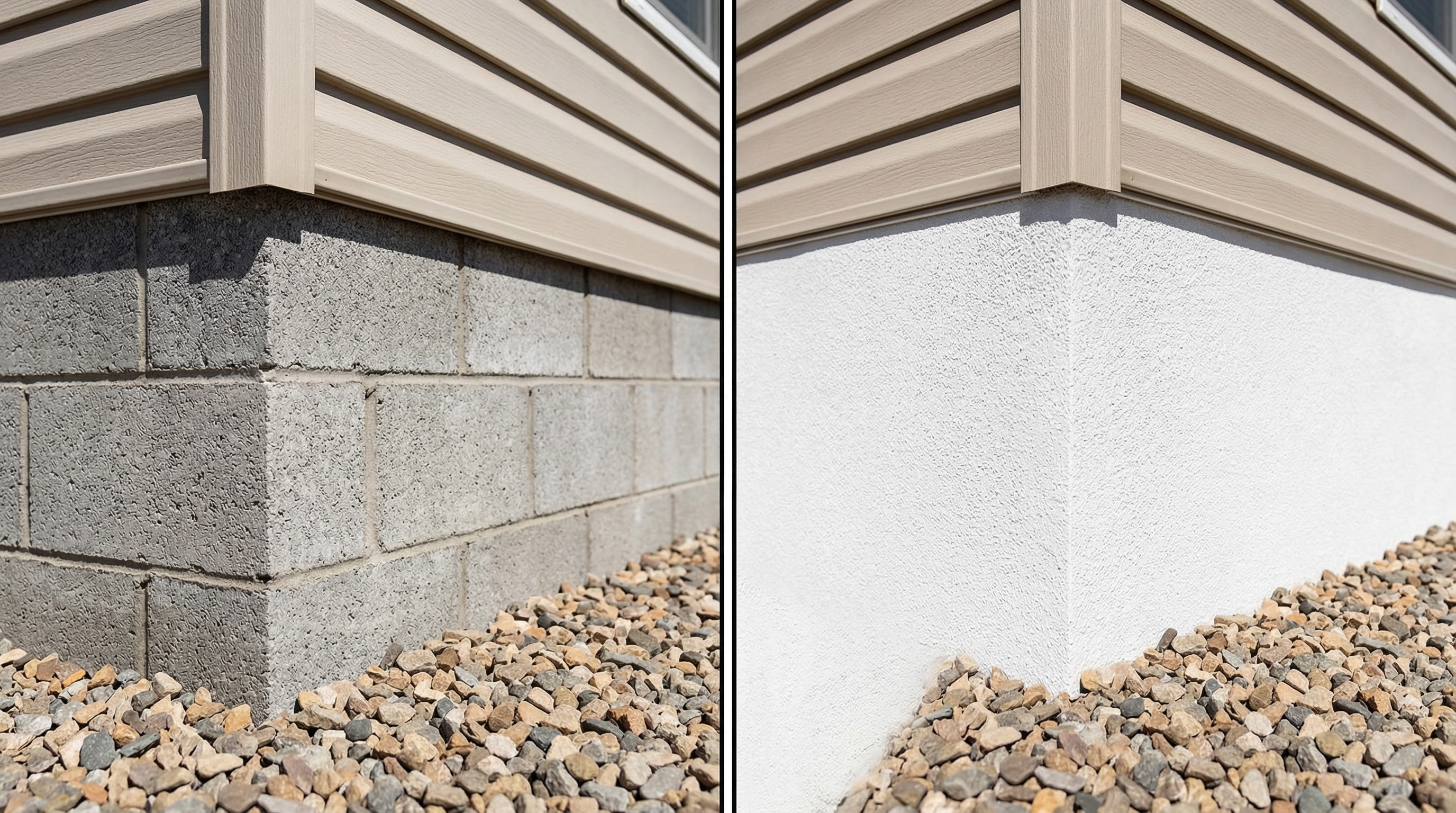
Concrete and stucco skirting is the most durable option. It resists pests, moisture, and rot, and some brands include hidden ventilation panels for a clean look. It's heavier and harder to install, but it can significantly increase the value of your mobile home.
Cost: Highest of all options. Precast concrete panel companies can reduce labor costs compared to hiring a mason. Cinder blocks run about $3+ per unit, plus mortar and skilled labor.
Cinder Block and Brick Skirting
You can skirt your home with real cinder blocks or bricks. While resin and vinyl can mimic the look, real masonry adds genuine permanence to the exterior. This doesn't legally classify your home as a permanent structure, but it does give it that appearance and can add real curb appeal and value.
Fiber Cement Skirting
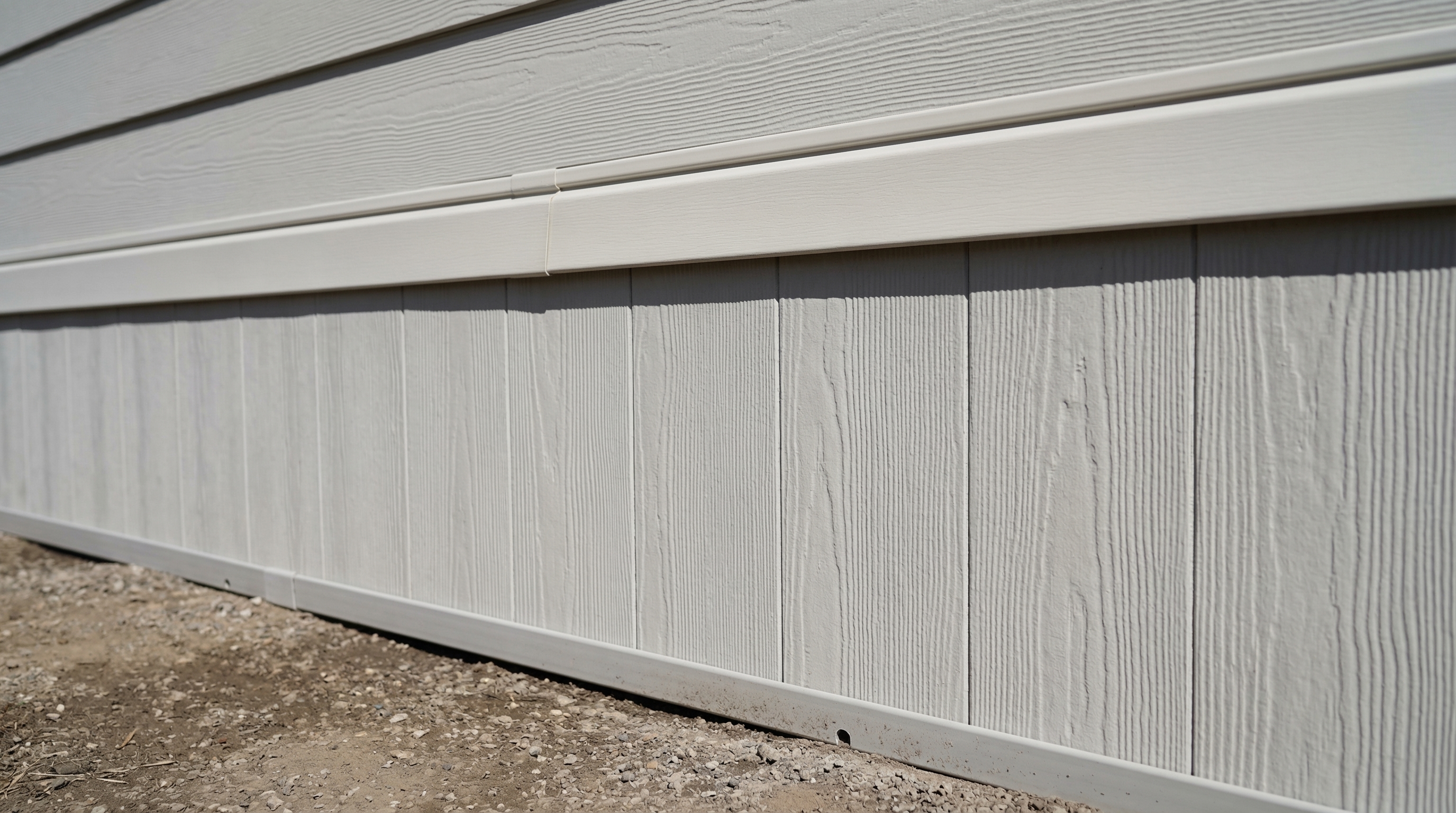
Fiber cement siding panels also work as skirting. Some manufacturers include a warranty when the product is installed according to their guidelines. It's a strong choice if you want a consistent look between your home's exterior walls and its base.
Lattice Skirting
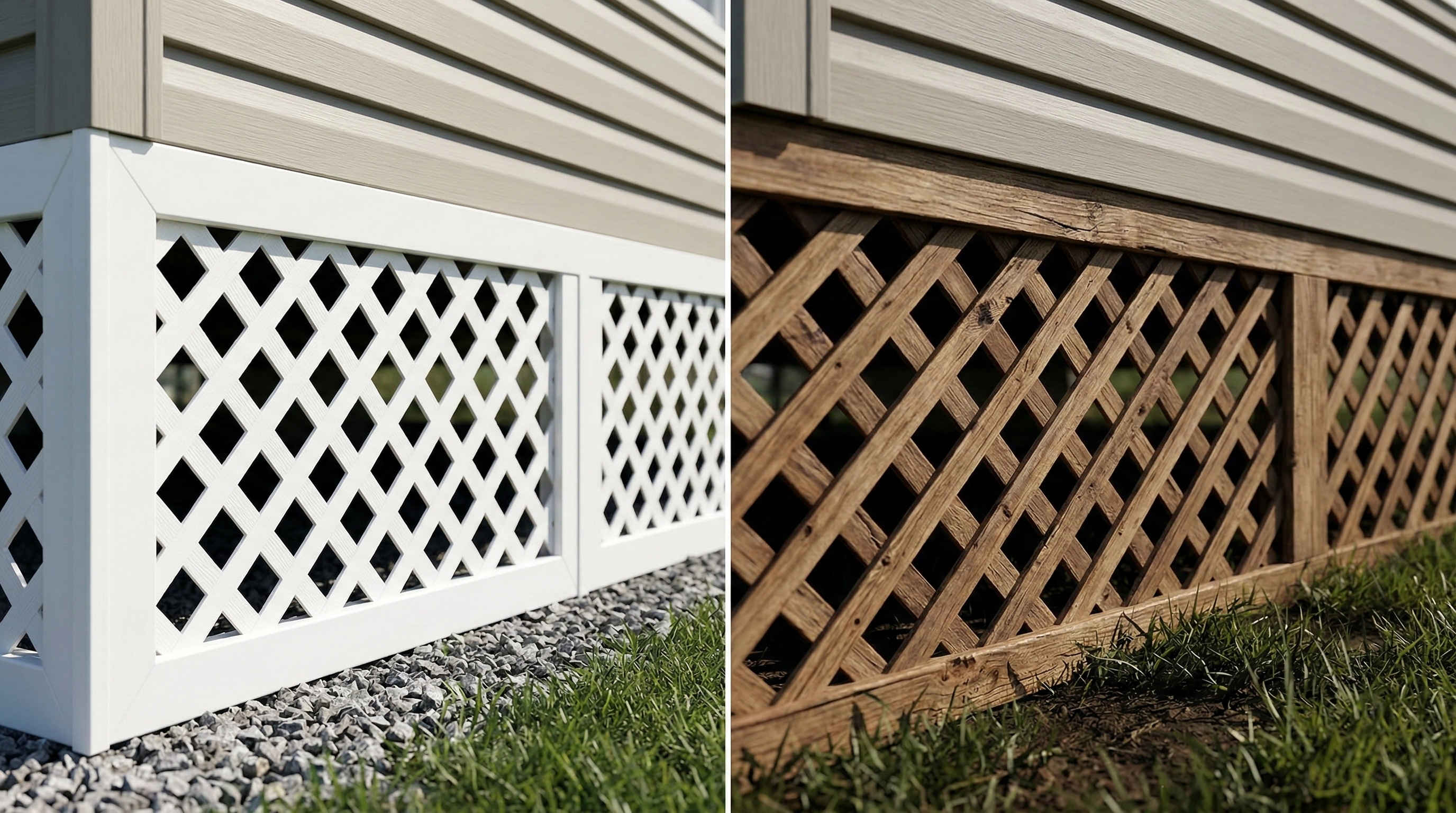
Lattice skirting is naturally ventilated, so you don't need to add extra vents. Wood lattice is inexpensive and easy to install but susceptible to rot and mildew over time. Vinyl lattice is more weather-resistant and comes in various colors and patterns for a more customized finish.
Skirting Ventilation
Regardless of material, proper ventilation under your skirting matters. Use insulated vents to control temperature and prevent moisture buildup. Place the access door close to water pumps and utility connections for easy maintenance.
Other Types of Skirting
Some homeowners get creative with skirting using materials like old corrugated metal roofing or railroad ties. These can work well for blocking rain, water, and small animals. Just weigh your options against durability, energy efficiency, and cost before going the DIY-material route.
Related: Ultimate Mobile Home Maintenance & Repairs Checklist
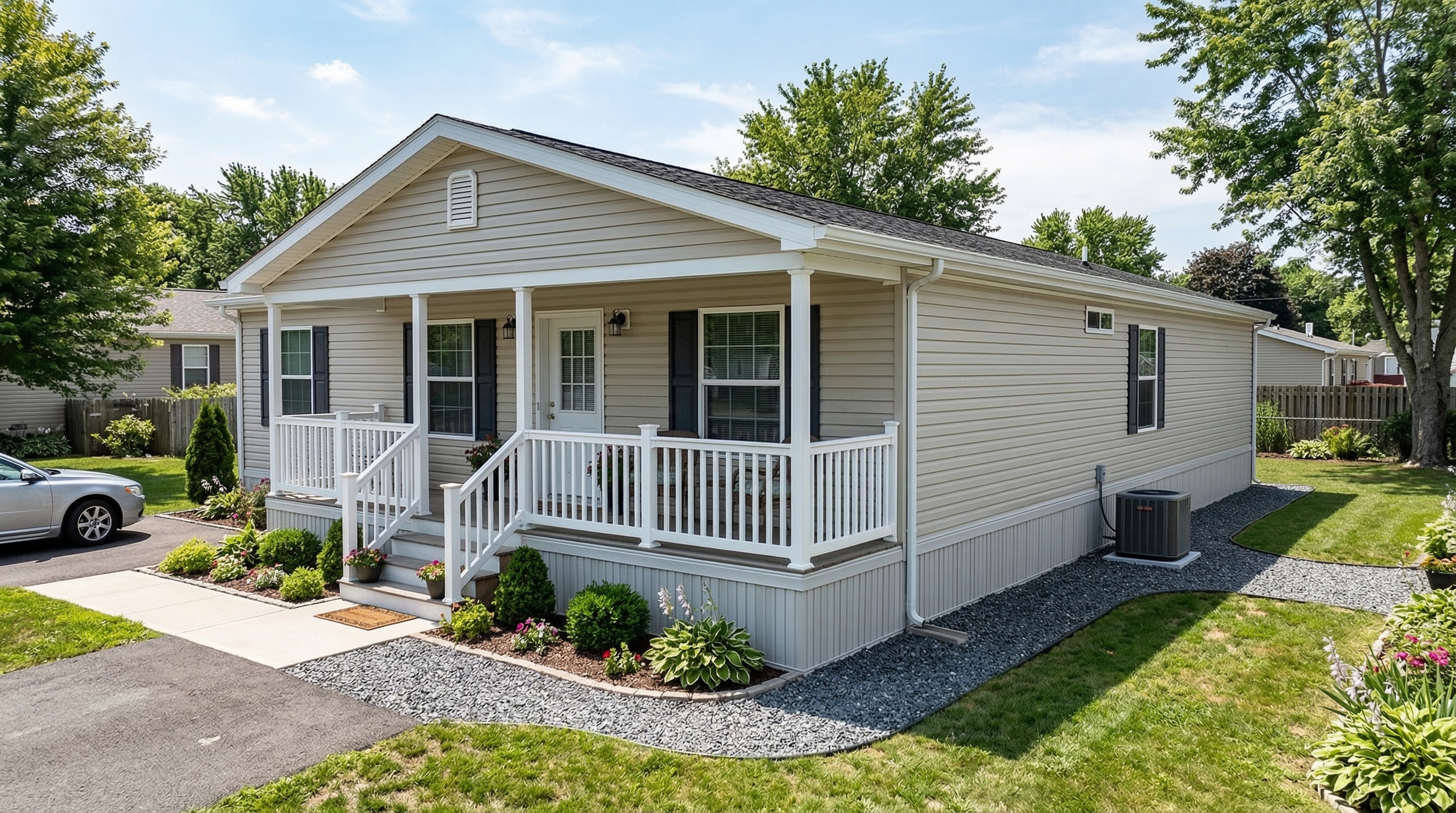
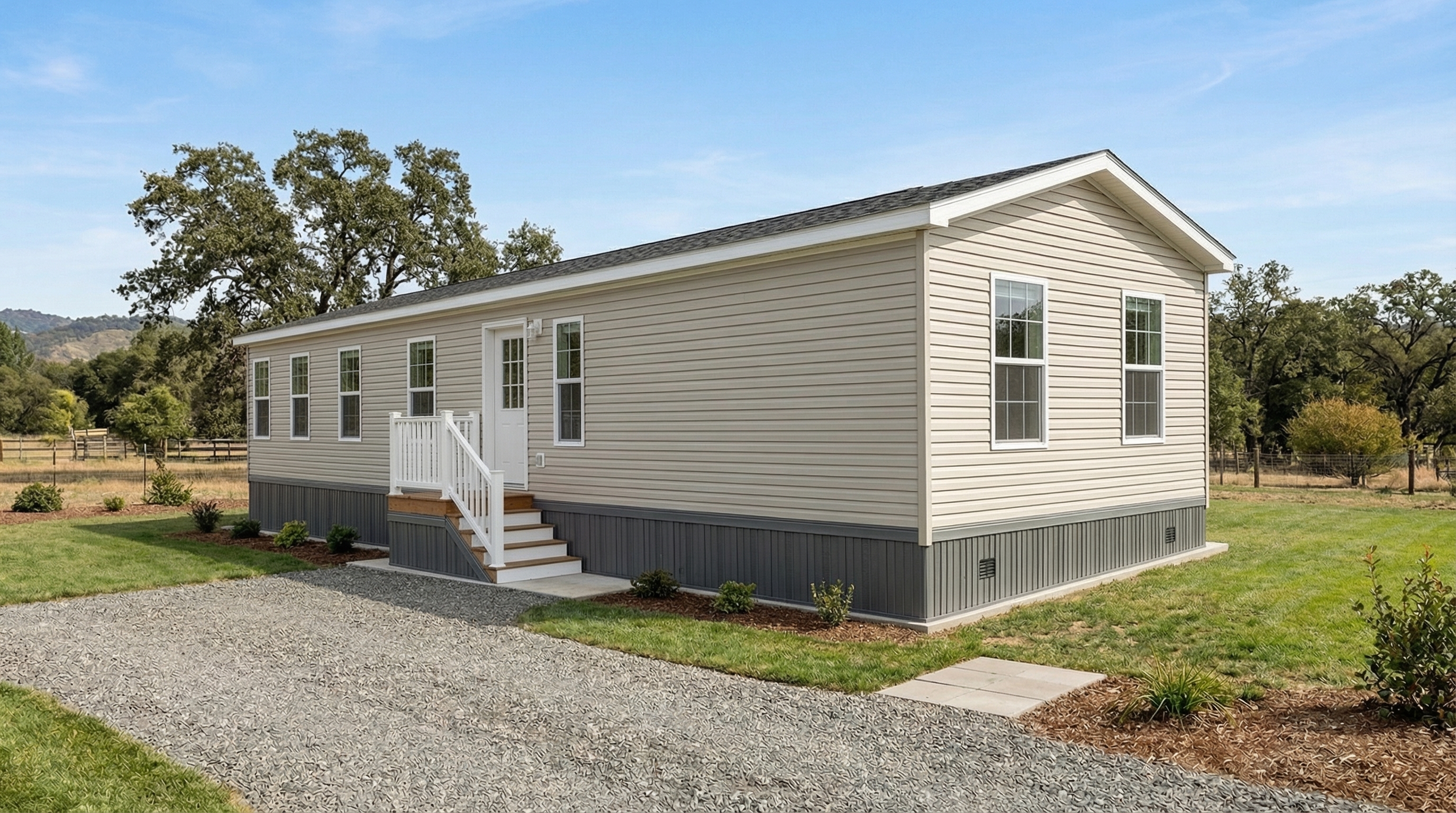
ALT Text: manufactured home exterior showing skirting installed along the base of the home
Factors to Consider When Choosing the Best Skirting
Cost is the first consideration since it shapes your mobile home skirting materials options. Pricier skirting usually offers better durability and curb appeal, but staying within budget is just as important as choosing quality.
Climate is equally critical: faux rock and concrete hold up in wet or cold regions, while vinyl and metal perform well in hot, dry areas. Polyethylene-based materials won't corrode in moisture-heavy environments.
If your home is on a permanent lot, invest in long-term materials like faux rock or brick. If you plan to move the home, metal skirting is much easier to disassemble. Before any mobile home skirting installation, check local permit and inspection requirements.
Shopping for Skirting Material
You can source most skirting materials at your local hardware store or order online. Physical stores let you see options in person and get advice from staff. Online retailers often carry more variety and ship directly to you. Either way, knowing your measurements beforehand saves time and prevents costly over-ordering.
How Much Skirting Does Your Mobile Home Need?
Measure each side of your home and add the lengths for the total perimeter. Include any porches. Then measure the height from the ground to the base at each corner, add those numbers, and divide by four for the average. Multiply perimeter by average height to get your total square footage. Use that figure to calculate material needs per panel or per square foot, depending on what you're buying.
What Tools Do You Need to Install Skirting?
For most skirting installations, you'll need:
-
Utility knife
-
Hammer and nails
-
Wood stakes and spikes
-
Tin snips
-
Drill and bit
-
Level and tape measure
Vinyl is the easiest material to install yourself. For anything involving framing or masonry, coordinating mobile home installation through a professional contractor is worth the cost.
Related: Mobile Home Installation Guide
Does Your Skirting Need to Be Insulated?
This depends entirely on where you live. If winters are harsh in your area, insulated skirting can meaningfully reduce drafts and heating costs during your mobile home skirting installation. In warmer, more temperate climates, standard skirting without insulation does the job just fine.
The Cost of Mobile Home Skirting
Skirting costs vary based on material, home size, and labor. Here's a general breakdown:
-
Vinyl: $400 to $1,300 standard; insulated vinyl up to $5,000
-
Simulated stone: $680 to $1,400 depending on home size
-
Rigid foam: $15 to $120+ per panel
-
Concrete and brick: highest cost, varies by region and labor rates
Discuss your full budget with any contractor before work begins, including removal of old skirting and any painting or decorative finishing costs.
Benefits of Hiring a Professional
A professional installer finishes faster, handles the permits, and helps you choose the right material for your specific location. They also handle all the details and stress that often come with the job. To find a good one, search Google, read reviews, and verify they're licensed, insured, and bonded before committing.
Skirting Maintenance Tips
Good upkeep protects your investment and keeps your home looking sharp. Clean vinyl with mild detergent and water, and keep grass trimmed away from the base. Touch up metal panels with fresh paint before rust sets in. If you have polyurethane skirting, wash it routinely with soap and water. Check vents regularly to prevent moisture buildup and mold growth under your home.
Misconceptions About Mobile Home Skirting
Skirting alone doesn't convert your mobile home into a permanent structure. Whether your home is classified as permanent depends on the foundation type, anchoring, and local code requirements, not the skirting material you choose.
Looking for a mobile home with the right skirting options already built in? Explore Home Nation's full selection today and get factory-direct pricing with no middleman markups.
Takeaway
Skirting is a straightforward project that most homeowners can tackle on their own, especially with vinyl. For bigger jobs using brick or rock, it's worth getting professional help to get it right. Either way, it's one of the better investments you can make for your home's longevity and appearance. Check out our prefabricated and used mobile homes at HomeNation.com to find a home that fits your land and your budget.